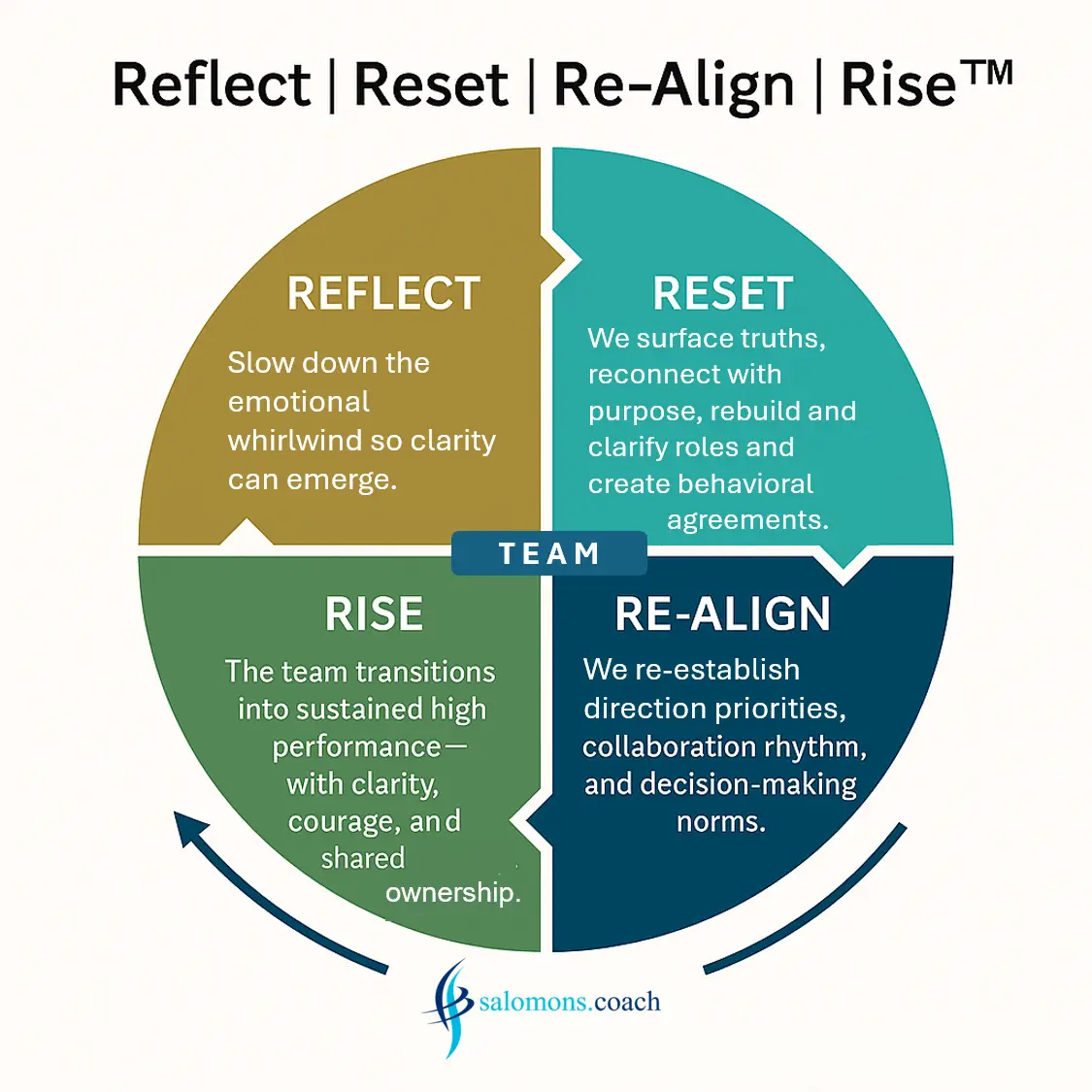
Ownership in organizations is often treated as a mindset problem. In reality, it is a design issue. When goals are unclear, authority and accountability are misaligned, and leadership behavior is inconsistent, ownership erodes. This article explains why ownership is not something you demand from people, but something you deliberately build through structure, behavior, and leadership discipline.

Most executive teams don’t fail because of strategy — they fail because of what they avoid. These 10 provoking questions cut through noise, expose blind spots, and accelerate real transformation. They challenge leaders to face the hard truths about their behavior, decisions, and impact. If you want to grow as a leader, start by answering these questions honestly.
Most teams don’t fail because they don’t work hard — they fail because they work too fast, too isolated, and without reflection.
When every team focuses on solving its own problems, sub-optimization becomes inevitable. Each quick fix triggers side effects elsewhere, creating a vicious cycle of ad-hoc problem-solving that drains energy and weakens performance.
Research on High-Performing Teams shows that real success depends on trust, shared purpose, and systemic alignment — not more speed.
Breaking that cycle starts when leaders and teams...
Strong emotions aren’t the problem — how we frame them is. In today’s volatile and uncertain world, leaders face constant pressure that triggers frustration, fear, or doubt. Reframing helps transform those emotions into clarity, courage, and connection. Instead of reacting, leaders learn to pause, reflect, and uncover the message behind the feeling. In this post, Jan Salomons shares how reframing turns emotion into data, reaction into reflection, and pressure into leadership strength — a crucial skill for leading in...