De Leiderschapsijsberg

Leiderschapscoaching
De Leiderschapsijsberg
Wat drijft gedrag en communicatie nu echt?
Wanneer mensen iemands leiderschap ervaren, zien ze voornamelijk wat zich boven de oppervlakte afspeelt.
Ze letten op wat de leider zegt, hoe die reageert op lastig nieuws, of ze luisteren, welke beslissingen ze nemen en of ze hun beloften nakomen. Deze zichtbare momenten beïnvloeden vertrouwen, betrokkenheid en prestaties.
Maar ze zijn slechts het tipje van de ijsberg.
Onder elke zichtbare reactie schuilt een combinatie van aannames, emoties, waarden, behoeften, overtuigingen, ervaringen en organisatiedruk. In mijn leiderschapscoaching gebruik ik het ijsbergmodel om leiders te helpen begrijpen hoe deze interne processen vormgeven wat andere mensen uiteindelijk zien en horen.
Het stelt ons in staat om verder te gaan dan de vraag: “Wat moet ik anders doen?” en de krachtigere vraag te verkennen:
“Wat gebeurt er onder de oppervlakte waardoor ik zo reageer?”
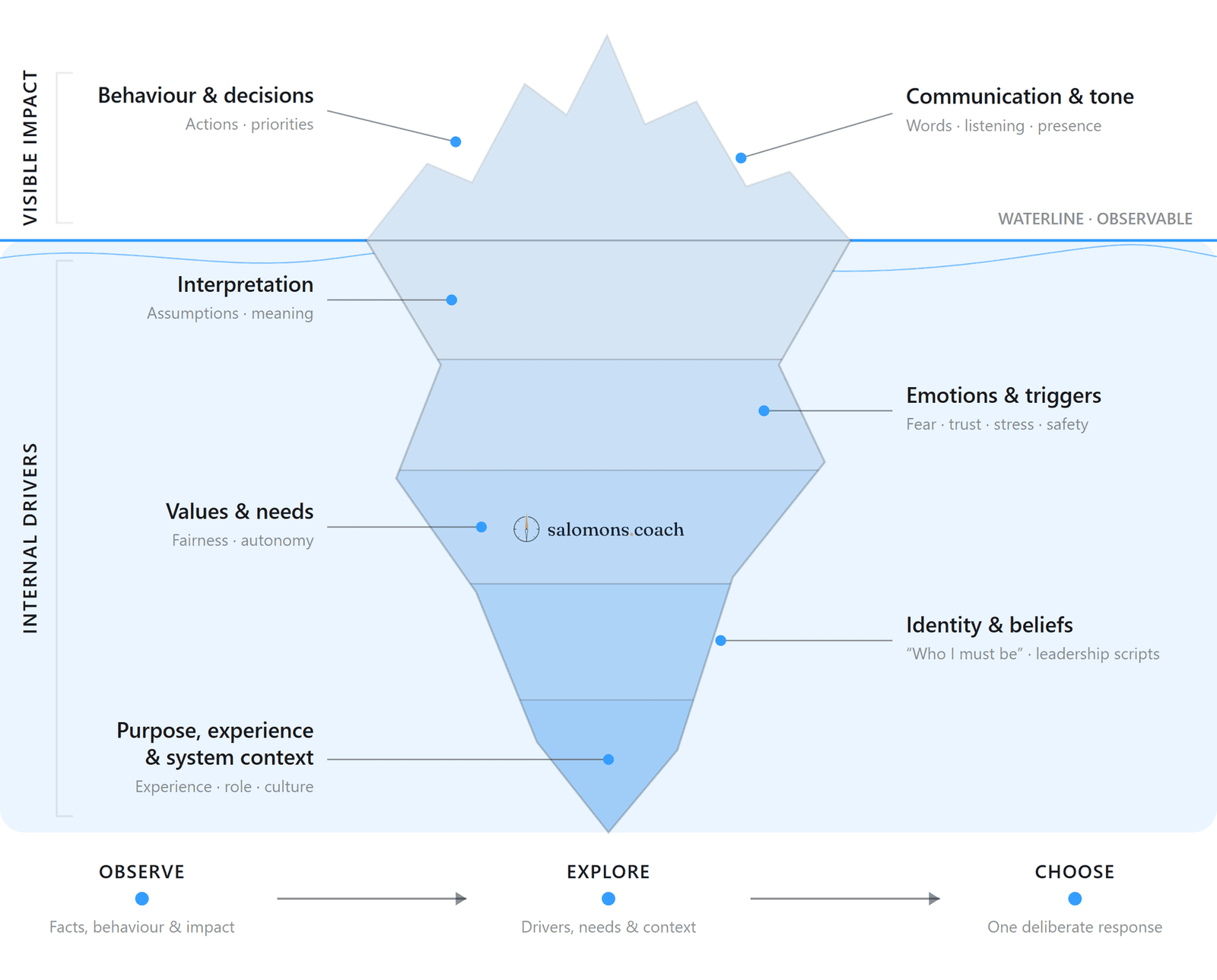
Boven de waterlijn: wat anderen ervaren
Het zichtbare deel van de leiderschapsijsberg bevat twee nauw met elkaar verbonden elementen.
Gedrag en beslissingen
Dit omvat wat een leider wel of niet doet:
- Prioriteiten stellen
- Beslissingen nemen
- Verantwoordelijkheid delegeren
- Feedback geven
- Reageren op fouten
- Conflicten beheersen
- Het nakomen van beloften
Deze acties communiceren wat er echt toe doet. Een leidinggevende kan bijvoorbeeld zeggen dat experimenteren wordt aangemoedigd, maar kritisch reageren wanneer het eerste experiment mislukt. Werknemers zullen het zichtbare gedrag meestal eerder geloven dan de uitgesproken intentie.
Communicatie en toon
Communicatie omvat veel meer dan woorden. Werknemers merken ook:
- Of de leider luistert of onderbreekt
- Welke vragen stellen ze
- Hun toon, gezichtsuitdrukking en lichaamstaal
- Hoe transparant ze communiceren
- Wat ze voortdurend benadrukken
- Wat ze vermijden te bespreken
- Hoe ze reageren onder druk
Zelfs stilte communiceert. Wanneer een leidinggevende een belangrijk probleem niet aankaart, creëren werknemers vaak hun eigen verklaring.
Omdat leiders formele bevoegdheid hebben, worden hun gedrag en communicatie versterkt. Een korte, afwijzende reactie kan de psychologische veiligheid binnen een hele team verminderen. Een kalme en nieuwsgierige reactie op slecht nieuws kan eerlijkheid en gedeelde verantwoordelijkheid stimuleren.
Onder de waterlijn: wat de reactie vormt
Het grootste deel van de ijsberg is minder zichtbaar. Een deel daarvan bevindt zich mogelijk ook buiten het onmiddellijke bewustzijn van de leider.
Interpretatie en aannames
Leiders reageren niet direct op de werkelijkheid. Ze reageren op hun interpretatie daarvan.
Een gemiste deadline kan worden geïnterpreteerd als een gebrek aan toewijding, slechte planning, onvoldoende capaciteit of een teken dat de werkdruk onrealistisch is. Elke interpretatie nodigt uit tot een andere reactie.
In coaching help ik daarom leiders om observatie van interpretatie te scheiden:
- Wat is er eigenlijk gebeurd?
- Welke betekenis heb je eraan gegeven?
- Wat nam je aan over de andere persoon?
- Welke andere verklaringen zouden ook mogelijk zijn?
Dit onderscheid kan een gesprek fundamenteel veranderen.
Emoties en triggers
Druk, onzekerheid en conflict activeren emotionele reacties. Een leidinggevende kan zich angstig, gefrustreerd, teleurgesteld, bedreigd of machteloos voelen—zelfs wanneer het enige zichtbare teken een scherpere toon, terugtrekking of grotere controle is.
Emoties zijn geen leiderschapsfouten. Ze verschaffen informatie over wat iemand als belangrijk of bedreigd beschouwt.
Wanneer een leider kan opmerken: “Ik word angstig en mijn instinct is om de controle over te nemen,” ontstaat er een kleine maar belangrijke ruimte tussen de trigger en de reactie. Binnen die ruimte heeft de leider een keuze.
Waarden en behoeften
Leiders worden beïnvloed door wat zij belangrijk vinden en nodig hebben. Dit kan gaan om rechtvaardigheid, prestatie, stabiliteit, autonomie, erkenning, ergens bij horen of vertrouwen.
Een sterke behoefte aan betrouwbaarheid kan leiden tot nuttige structuur en helderheid. Onder druk kan dezelfde behoefte omslaan in buitensporige controle. Een streven naar harmonie kan een leider helpen relaties op te bouwen, maar het kan noodzakelijke conflicten ook moeilijker maken.
De waarde zelf is meestal niet het probleem. De vraag is of de leider deze bewust en constructief uitdrukt.
Identiteit en overtuigingen
Op een dieper niveau dragen leiders overtuigingen met zich mee over zichzelf, andere mensen en leiderschap:
- “Een goede leider heeft altijd het antwoord.”
- “Twijfel tonen zal het vertrouwen ondermijnen.”
- “Als ik niet de controle behoud, zal de kwaliteit eronder lijden.”
- “Conflict beschadigt relaties.”
- “Mensen zijn niet te vertrouwen totdat ze zichzelf hebben bewezen.”
- “Ik ben verantwoordelijk voor het oplossen van elk probleem.”
Deze overtuigingen fungeren als interne leiderschapsscripts. Ze beïnvloeden welke gedragingen natuurlijk, ongemakkelijk of onmogelijk aanvoelen.
Leiderschapsontwikkeling wordt duurzamer wanneer leiders leren deze scripts te herkennen en te onderzoeken in plaats ze automatisch te volgen.
Doel, ervaring en systeemcontext
Aan de basis van de ijsberg liggen vormende ervaringen, een persoonlijke missie en de omgeving waarin de leider werkzaam is.
Eerdere successen en mislukkingen bepalen de huidige verwachtingen. Ook de organisatiecultuur, prikkels, werkdruk, hiërarchie en druk vanuit het topmanagement beïnvloeden het gedrag.
Wat een individueel communicatieprobleem lijkt, kan daarom gedeeltelijk in stand worden gehouden door het omliggende systeem. Ik gebruik het ijsbergmodel om deze interactie te verkennen—niet om de leider te psychoanalyseren of de schuld te geven.
Hoe ik het model toepas bij leiderschapscoaching
Ik begin meestal met een concreet voorbeeld uit de praktijk: een moeilijk gesprek, een beslissing die op weerstand stuitte, feedback die niet goed werd ontvangen, of een situatie waarin de leidinggevende zich controlerender of teruggetrokken ging gedragen.
We bekijken eerst de zichtbare laag:
- Wat heb je gedaan?
- Wat zei je?
- Wat hebben anderen opgemerkt?
- Wat was het effect?
Vervolgens gaan we onder de waterlijn:
- Wat dacht u dat er aan de hand was?
- Wat voelde je toen?
- Wat wilde je bereiken, beschermen of vermijden?
- Welke waarde of behoefte vond je belangrijk?
- Welke opvatting over leiderschap heeft je antwoord beïnvloed?
- Hoe heeft de organisatorische context bijgedragen?
Ten slotte keren we terug naar de oppervlakte en overwegen we een meer weloverwogen reactie.
Observeren → Ontdekken → Kiezen
Deze beweging – naar beneden, naar bewustwording, en weer omhoog, naar keuze – is waar een groot deel van de waarde van coaching ligt. Inzicht alleen is niet genoeg. Het inzicht moet uiteindelijk tot uiting komen in ander gedrag en andere communicatie.
De eerste hindernissen die leiders moeten overwinnen
Het gebruik van het ijsbergmodel lijkt op het eerste gezicht eenvoudig. In de praktijk vraagt het kijken onder de oppervlakte echter iets anders van leiders.
Leiders zijn er doorgaans aan gewend om externe problemen te analyseren, beslissingen te nemen en oplossingen te bedenken. Ze zijn wellicht minder gewend om hun eigen interne processen onder de loep te nemen. Tijdens coaching doen zich vaak een aantal aanvankelijke hindernissen voor.
Waarneming en interpretatie van elkaar scheiden
Een van de eerste uitdagingen is om onderscheid te maken tussen wat er daadwerkelijk is gebeurd en de betekenis die de leider eraan heeft gegeven.
“Mijn team is terughoudend” is een interpretatie. “Drie teamleden hebben vraagtekens geplaatst bij het voorgestelde tijdschema” is een constatering.
Wanneer deze twee als hetzelfde worden beschouwd, worden aannames al snel als feiten beschouwd. Coaching helpt de leidinggevende om even pas op de plaats te maken en andere mogelijke verklaringen in overweging te nemen.
Automatische reacties vertragen
Leiderschap vereist vaak snelheid, maar door die snelheid kunnen reflexmatige reacties soms moeilijk te herkennen zijn.
Een leidinggevende kan vrijwel onmiddellijk overschakelen van het gevoel dat hij wordt uitgedaagd naar het verdedigen van een beslissing, of van het aanvoelen van risico naar het versterken van de controle. Het ijsbergmodel vraagt de leidinggevende om even stil te staan en op te merken wat er tussen de aanleiding en de zichtbare reactie is gebeurd.
Kwetsbaarheid accepteren
Het verkennen van angst, onzekerheid, identiteit of onvervulde behoeften kan in het begin ongemakkelijk aanvoelen. Dit geldt met name voor leiders die van mening zijn dat leiderschap voortdurend zelfvertrouwen en zekerheid vereist.
Het herkennen van angst of twijfel maakt iemand geen zwakkere leider. Het maakt het mogelijk om te voorkomen dat die emoties hun gedrag onbewust aansturen.
Verder gaan dan intellectuele analyse
Sommige leiders begrijpen het model conceptueel, maar blijven het benaderen als zomaar een analytische oefening. Ze kunnen een patroon uitleggen zonder echt contact te maken met de emotie, de fysieke reactie of de onderliggende behoefte die daarbij komt kijken.
Coaching moet daarom verder gaan dan “Ik begrijp waarom ik dit doe” richting “Ik kan herkennen wanneer dit gebeurt en een andere keuze maken.”
Impact maken zonder in de verdediging te schieten
Het kan moeilijk zijn om te accepteren dat een positieve intentie een negatief effect heeft gehad.
Een leider wilde mogelijk de kwaliteit beschermen, duidelijkheid creëren of de vaart erin houden. Hun team heeft datzelfde gedrag echter als controlerend, afwijzend of ongeduldig kunnen ervaren.
Het ijsbergmodel ontkracht de intentie van de leider niet. Het helpt hen intentie en impact met elkaar te verbinden.
Zelfoordeel vermijden
Het ontdekken van een belemmerende overtuiging of reactief patroon kan leiden tot schaamte of zelfkritiek. Dat vermindert meestal de openheid en het leervermogen.
Het doel is niet om het antwoord als goed of slecht te bestempelen. Het is om te begrijpen wat het patroon probeerde te bereiken, of het nog steeds nuttig is en welk alternatief er nu beschikbaar is.
Het model niet gebruiken om andere mensen te diagnosticeren
Het ijsbergmodel is het meest nuttig als hulpmiddel voor zelfreflectie. Leiders kunnen in eerste instantie de neiging hebben om te speculeren over wat er schuilt achter het gedrag van een ander.
Die aannames moeten worden omgezet in vragen in plaats van als feiten te worden gepresenteerd. Nieuwsgierigheid creëert dialoog; amateuristische diagnose sluit die meestal af.
Het erkennen van de invloed van het systeem
Niet elk leiderschapsprobleem wordt veroorzaakt door een individuele overtuiging of emotionele trigger. Werkdruk, concurrerende doelstellingen, organisatiecultuur, prikkels en verwachtingen van het senior management kunnen allemaal bepaald gedrag versterken.
Effectieve coaching onderzoekt zowel de persoon als de omgeving waarin het gedrag plaatsvindt.
Inzicht omzetten in zichtbare verandering
Een laatste hindernis is het omzetten van bewustwording in actie.
Een leider kan tijdens coaching tot een belangrijk inzicht komen, maar de mensen om hen heen kunnen pas ontwikkeling ervaren wanneer dat zichtbaar wordt. De sessie moet daarom eindigen met een concreet gedragsexperiment: een andere vraag, een helderder gesprek, een gedelegeerde beslissing of een nieuwe reactie op meningsverschillen.
Het eerste doel is niet om de leider zo diep mogelijk te laten gaan. Het is om voldoende veiligheid, nieuwsgierigheid en precisie te creëren voor eerlijke zelfreflectie, met behoud van de verantwoordelijkheid voor de impact van de leider.
Een terugkerend patroon in coaching
Beschouw een team dat een belangrijke verandering uitdaagt.
Een lezer kan de vragen interpreteren als weerstand. Dit wekt angst op om vaart te verliezen. De leider hecht waarde aan besluitvaardigheid en is van mening dat een sterke leider zekerheid moet uitstralen. Ze brekken de discussie daarom af en communiceren het besluit krachtiger.
Werknemers ervaren ongeduld en beperkte openheid. Ze worden stiller, wat de leidinggevende vervolgens kan interpreteren als desinteresse of een gebrek aan eigenaarschap. Het patroon versterkt zichzelf.
In coaching kunnen we deze reeks vertragen. Een bewuster antwoord zou kunnen zijn:
“Ik merk dat ik deze vragen opvat als weerstand. Ik voel druk om snel te handelen, en dat maakt me minder open. Laat me verduidelijken wat al is beslist, wat openstaat en welke risico's volgens jullie overwogen moeten worden.”
De leider heeft de autoriteit niet overgedragen. Ze hebben hun interne proces bewuster gemaakt en omgezet in duidelijker leiderschap.
Resultaten die ik bij klanten heb gezien
Bij een aantal van mijn klanten heeft het werken met het ijsbergmodel bijgedragen aan betekenisvolle veranderingen in hun leiderschap.
Leiders zijn beter geworden in het:
- Herken emotionele triggers voordat je reageert
- Onderscheid feiten van aannames
- Ga met meningsverschillen om zonder onmiddellijk in de defensie te schieten
- Vervang micromanagement door duidelijkere verwachtingen en verantwoordelijkheid
- Delegeer met meer zelfvertrouwen
- Pak moeilijke kwesties eerder en directer aan
- Leg de achtergrond van beslissingen transparanter uit
- Blijf nieuwsgierig en aanwezig tijdens uitdagende gesprekken
Deze individuele veranderingen kunnen ook invloed hebben op het bredere team. Wanneer leiders minder reactief en transparanter worden, zijn werknemers vaak meer bereid om openlijk te spreken, problemen aan te kaarten en verantwoordelijkheid te nemen. Gesprekken worden constructiever en meningsverschillen worden minder snel persoonlijk of blijven onopgelost.
De resultaten worden niet alleen door het model gecreëerd. Het model biedt een taal en structuur voor de diepere reflectie, experimenten en praktijk die ontwikkeling vereist.
Vijf vragen die leiders kunnen gebruiken
Leiders kunnen het ijsbergmodel toepassen door zichzelf af te vragen:
- Wat was waarneembaar?
Beschrijf het gedrag en de communicatie zonder ze onmiddellijk te beoordelen. - Welke interpretatie heb ik gemaakt?
Scheid feiten van aannames en overweeg andere mogelijke verklaringen. - Wat voelde ik of was ik aan het beschermen?
Identificeer de emotie, behoefte, waarde of het waargenomen risico achter de reactie. - Welke leiderschapsovertuiging was actief?
Vraag wat je destijds geloofde te moeten doen, bewijzen of voorkomen. - Welk antwoord zou beter aan mijn doel beantwoorden?
Kies gedrag dat past bij zowel de situatie als de leider die je wilt zijn.
Leiderschapsontwikkeling vindt plaats onder de oppervlakte
Zichtbaar gedrag doet ertoe. Leiders blijven verantwoordelijk voor hun daden, woorden en impact.
Maar duurzame verandering komt zelden voort uit het corrigeren van gedrag alleen. Een leidinggevende vertellen om “meer te luisteren”, “beter te delegeren” of “minder controlerend te zijn” pakt mogelijk het symptoom aan zonder het interne proces te veranderen dat dit herhaaldelijk veroorzaakt.
Het ijsbergmodel voegt de noodzakelijke diepgang toe. Het helpt leiders om wat ze doen te verbinden met hoe ze hun omgeving interpreteren, voelen, geloven en erop reageren.
Het doel is niet om emotie uit te bannen of elk intern proces perfect te begrijpen. Het is om je voldoende bewust te worden van wat er zich onder de oppervlakte afspeelt om daarboven een bewuster aandeel in de keuze te hebben.
Voor mij vormt dat de kern van volwassen leiderschap: niet leidinggeven zonder druk, aannames of emotie, maar de invloed daarvan erkennen—en bewust kiezen wat er vervolgens gebeurt.